by Kevin
Share
by Kevin
Share
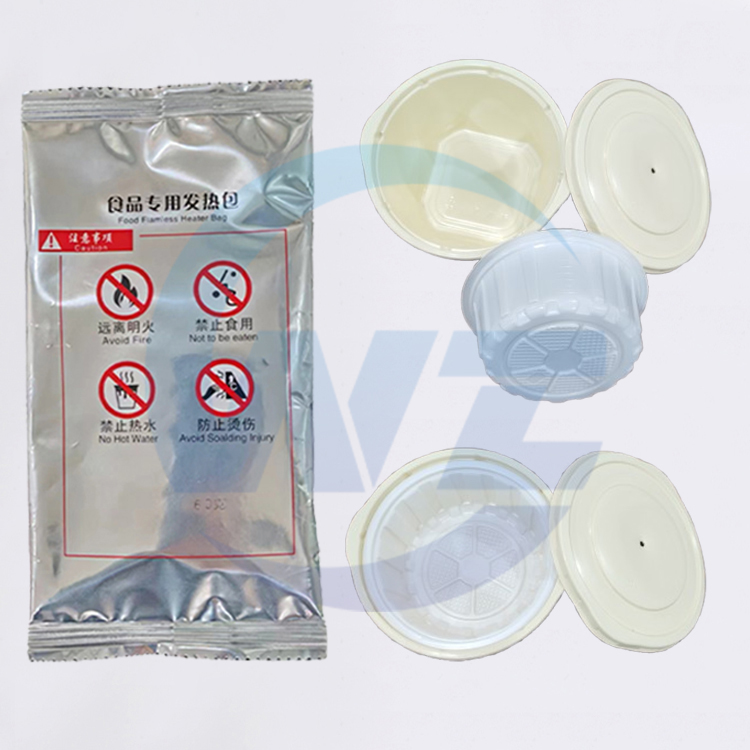
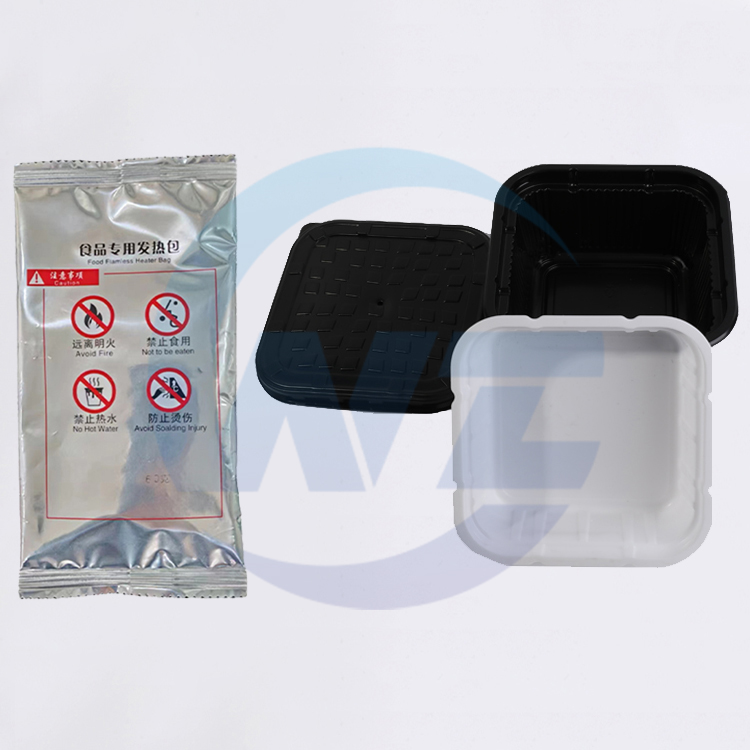
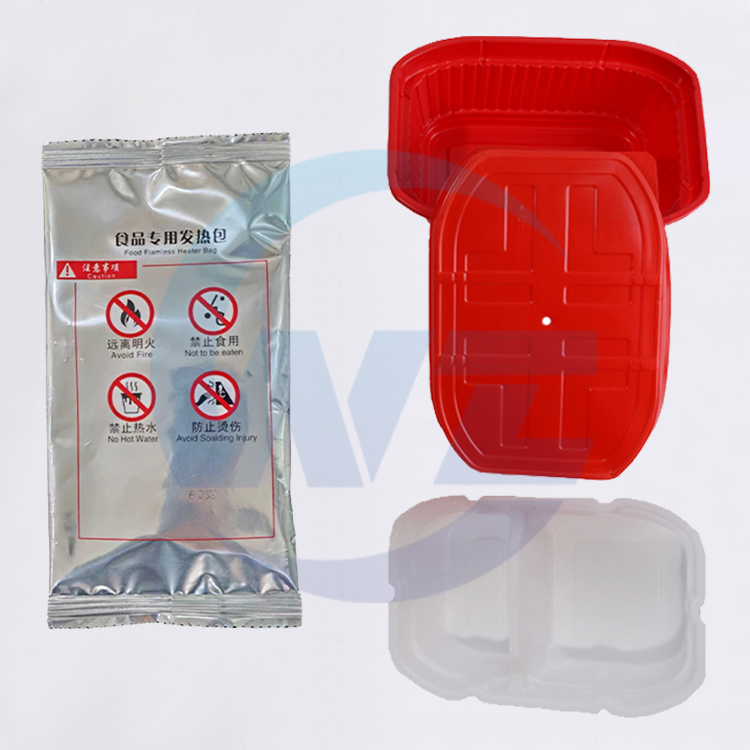
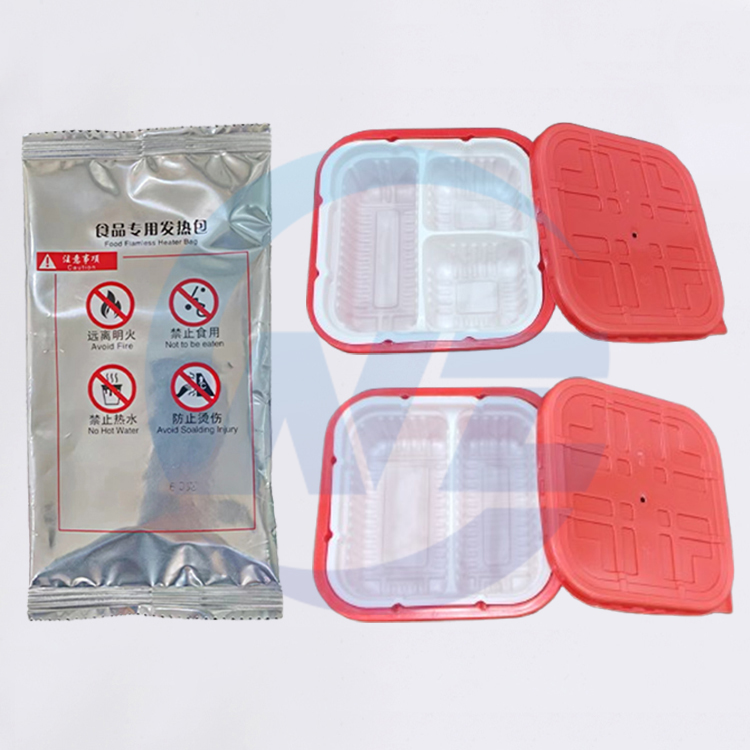
A Flameless Ration Heater (FRH) is a compact, lightweight heating device primarily used to warm military Meals Ready-to-Eat (MREs) without the need for fire or electricity. By simply adding a small amount of water, these pouches generate enough heat to cook a meal in minutes. While they are a staple of modern military logistics and disaster relief, their reliance on a rapid chemical reaction raises an important question: is the FRH a triumph of safe, portable chemistry, or does its byproduct of flammable hydrogen gas present a hidden hazard that users often overlook?
Features of Flameless Ration Heaters
Flameless Operation
FRHs produce heat through an exothermic chemical reaction rather than combustion. This means no open flames, no smoke, and no visible light, which is crucial for stealth in military operations and safety in dry, fire-prone environments.
Rapid Heat Generation
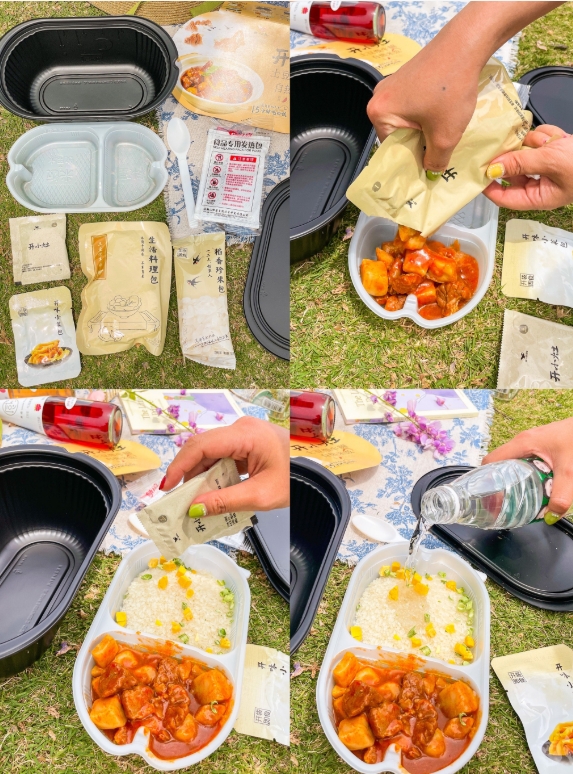
Once activated by water, the heater begins boiling almost immediately. It can reach temperatures high enough to warm a pre-cooked meal to a palatable temperature in just 10 to 15 minutes.
Infrastructure Independent
Because they require nothing but a few tablespoons of water to activate, FRHs work perfectly in off-grid scenarios where fuel, batteries, or electricity are completely unavailable.
Ultra-Portable Design
FRHs are designed to be as flat and lightweight as possible. They easily slip into an MRE bag, adding minimal weight to a soldier’s or hiker’s pack while providing a massive morale boost through a hot meal.
How are Flameless Ration Heaters made?
The manufacturing process carefully combines reactive metals and stabilizing agents into a safe, user-friendly package.
Material Preparation
The core active ingredient is a magnesium-iron alloy powder. This is blended with a catalyst—typically sodium chloride (table salt)—and a filler like vermiculite or carbon to help distribute the heat evenly and control the reaction rate.
Mixing and Packaging
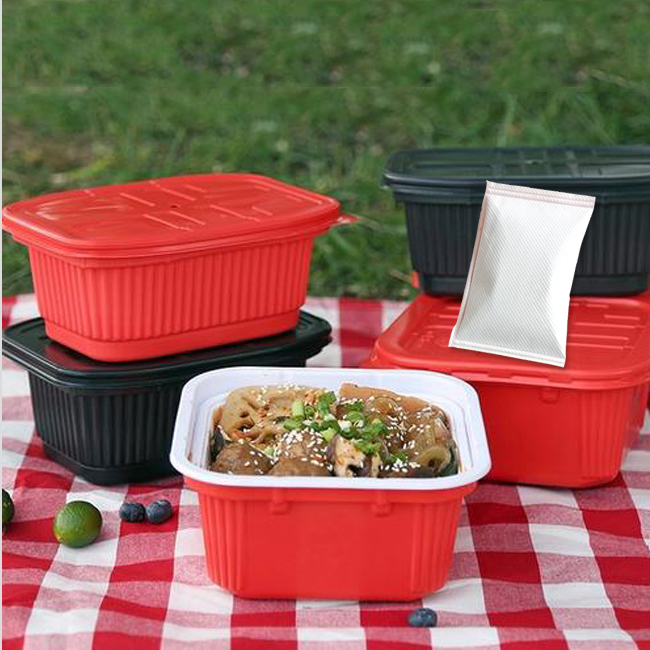
The dry mixture is poured into a porous, non-woven fabric pad. This pad is specifically designed to allow water to penetrate quickly while keeping the reactive powder contained. It is then inserted into an outer plastic sleeve.
Sealing
The outer sleeve is vacuum-sealed to lock out ambient moisture. This ensures the chemical reaction does not begin prematurely and guarantees a long shelf life, even in humid environments.
Popular Uses of Flameless Ration Heaters
Military Field Operations
FRHs were developed for the U.S. military to ensure soldiers in combat zones receive a hot meal, which is critical for maintaining morale, body temperature, and energy levels in harsh conditions.

Disaster Relief and Humanitarian Aid
When natural disasters destroy power grids and gas lines, relief agencies distribute FRHs alongside food aid. They allow victims to enjoy a hot meal in shelters or damaged homes without risking fire from candles or stoves.
Outdoor Survival and Recreation
Hikers, hunters, and backcountry campers use FRHs as a lightweight, reliable backup heat source for MREs or freeze-dried meals when stoves fail or are left behind.
How to choose a Flameless Ration Heater that suits your needs?
Evaluate Heat Output and Duration
Not all FRHs are created equal. Check the specifications to ensure the heater generates sufficient heat (usually around 100°F to 140°F for the food) and lasts long enough (at least 12-15 minutes) to fully warm your specific meal size.
Check Packaging Durability
For rugged use, the outer sleeve must be puncture-resistant and completely airtight. A compromised seal means a dead heater when you need it most.
Verify Safety Compliance
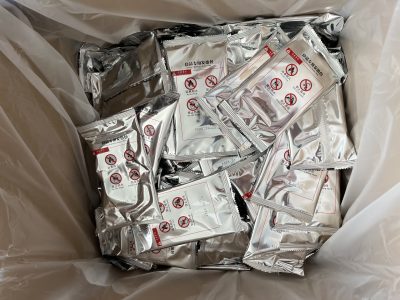
Reputable manufacturers provide Safety Data Sheets (SDS) and adhere to strict military or ISO standards. Ensure the product has clear warning labels regarding hydrogen gas and proper ventilation.
How to care for and safely use a Flameless Ration Heater?
Proper Storage
Store FRHs in a cool, dry place. Prolonged exposure to high humidity or extreme heat can degrade the outer packaging and reduce the reactivity of the magnesium powder over time.
Mandatory Ventilation
Never use an FRH in an enclosed space, such as inside a sealed tent, a closed vehicle, or a small bunker. The reaction produces hydrogen gas, which is highly flammable and can create an explosive risk if trapped.
Follow Instructions Precisely
Only use the recommended amount of water (usually a few ounces). Do not puncture or tear the inner fabric pad, as this can cause the unreacted magnesium powder to spill, leading to rapid, uncontrolled heating.
Conclusion
The Flameless Ration Heater is an ingenious piece of technology that solves the complex problem of delivering hot food in the most austere environments. It is not inherently a “hidden hazard” if treated with respect, but it is not a simple toy either. Understanding the chemistry—specifically the generation of hydrogen gas—and adhering strictly to ventilation and usage guidelines is essential. When used correctly, FRHs remain one of the safest and most effective field heating tools available.
If you think this article is helpful, please contact us. We will give you reasonable and suitable product recommendations based on your current situation. If you are not sure, you can also consult us. We will provide you with professional services to answer your questions. You are welcome to consult us at any time and we welcome all customers to conduct on-site inspections!
STAY IN THE LOOP