by Kevin
Share
by Kevin
Share
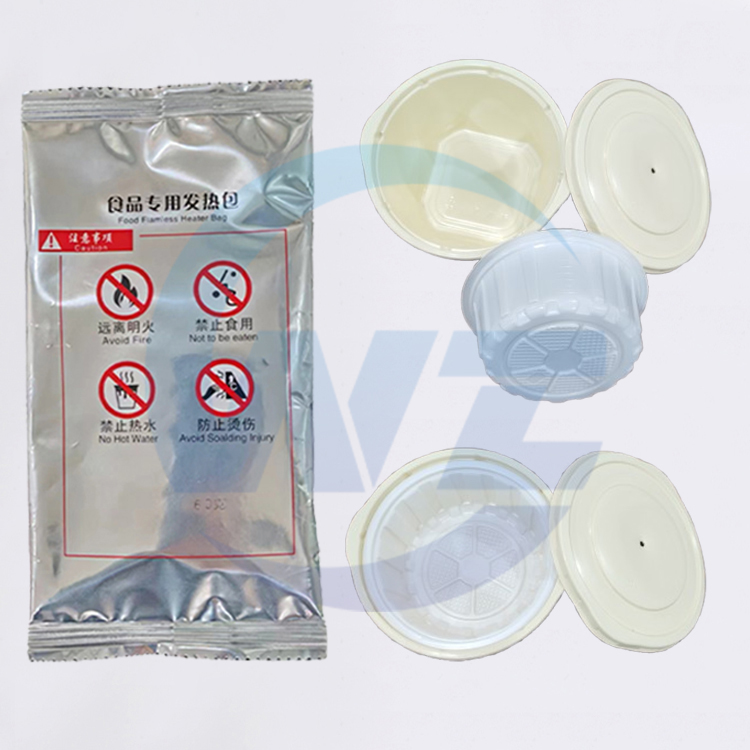
Self-heating meals represent a significant leap in food technology, allowing consumers to enjoy a hot, piping meal anytime, anywhere, without the need for a microwave, stove, or boiling water. Originally developed for military use, these meals utilize a chemical exothermic reaction to heat food within minutes. Today, they are popular among outdoor enthusiasts, travelers, and busy professionals. However, a debate exists regarding their value: are these meals a revolutionary solution for modern dining, or are they merely overpriced convenience food with too much packaging waste?
Features of Self-Heating Meals
Instant Heating Technology
The standout feature is the integrated self-heating mechanism. With the simple addition of water, the internal heater activates and warms the meal to a safe eating temperature (typically around 140°F or 60°C) in about 10 to 15 minutes.
Complete Meal in a Package
Self-heating meals are designed as all-in-one solutions. The package typically contains the main entree, a side dish, utensils, a napkin, and sometimes a seasoning packet, providing a complete dining experience in a single compact box.
Long Shelf Stability
Thanks to advanced retort packaging technology, these meals can withstand long-term storage without refrigeration. They are perfect for stocking up in emergency kits or keeping in the car for unexpected situations.
No External Power Required
Whether you are on a mountain peak, in a traffic jam, or during a power outage, these meals require no electricity, gas, or fire. This independence from external power sources makes them incredibly versatile for various environments.
How are Self-Heating Meals made?
The production of self-heating meals combines culinary preparation with precise chemical engineering.
Food Preparation and Sterilization
First, the food is cooked and prepared according to specific recipes. It is then sealed into a flexible, multi-layered retort pouch. The pouch undergoes thermal sterilization to kill bacteria, ensuring the food remains safe and shelf-stable for years.
Heating Element Manufacturing
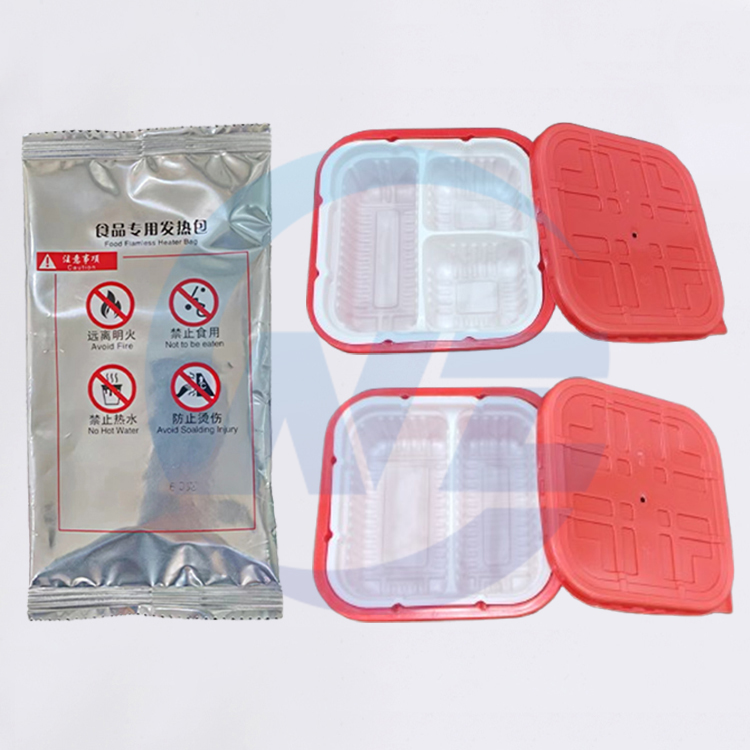
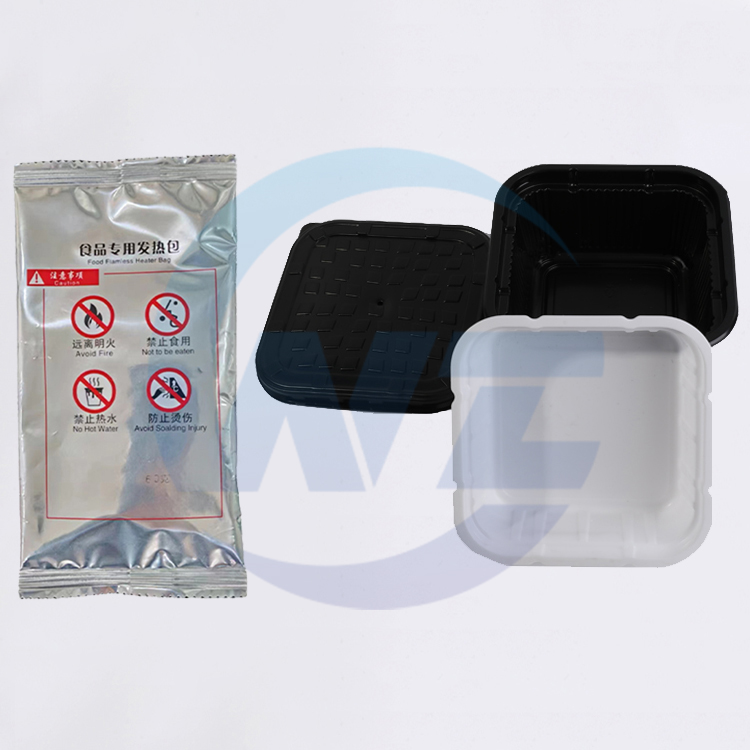
The heating element is produced separately. It typically consists of a mixture of food-grade magnesium and iron powder, salt, and a porous filler material. This mixture is sealed in a specialized pad or pouch that allows water to penetrate and trigger the reaction.
Assembly of the Kit
The food pouch and the unactivated heating element are placed together in a rigid outer box, usually made of polypropylene or cardboard. The box is designed to hold the food securely above the heater during the activation process, ensuring efficient heat transfer.
Quality Control
To ensure safety, the chemical heaters are tested for reactivity and heat output, while the food pouches are checked for seal integrity. This dual verification ensures that both the heating mechanism and the meal are reliable when the consumer eventually uses them.
Popular Uses of Self-Heating Meals
Outdoor Adventures
Campers, hikers, and hunters value self-heating meals because they eliminate the need to carry heavy camping stoves and fuel canisters. They provide a hot, satisfying meal at the end of a long day on the trail.
Emergency Preparedness
In disaster relief scenarios or severe weather events where utilities are disrupted, self-heating meals provide critical access to hot food, which is essential for maintaining body temperature and morale.
Corporate and Travel Logistics
These meals are increasingly used in the airline industry for crew meals, in remote work sites for construction teams, and by long-haul truck drivers who need a hot meal option without stopping for restaurants.
How to choose a Self-Heating Meal that suits your needs?
Check the Menu Variety
Unlike basic survival rations, self-heating meals often offer a wide range of cuisines, from pasta and rice dishes to stews. Look for brands that offer high-quality ingredients and menus that appeal to your personal taste preferences.
Assess Heating Speed
Not all heaters work at the same speed. Check the specifications to see how long it takes to reach serving temperature. Faster heaters are more convenient when you are hungry or in a cold environment.
Consider Sodium and Nutritional Content
Many shelf-stable meals are high in sodium to preserve flavor. If you are health-conscious, look for options with lower sodium levels or cleaner ingredient lists to avoid the “processed food” feel.
Evaluate Packaging Waste
Given the environmental concerns, look for brands that use recyclable materials or minimalist packaging. Some brands are now offering biodegradable options to reduce the footprint of the heating pouch.
How to care for a Self-Heating Meal?
Proper Storage Conditions
Store the meals in a cool, dry place away from direct sunlight. While they are durable, extreme heat can degrade the food quality over time and reduce the shelf life of the chemical heater.
Check for Package Integrity
Before using, inspect the outer box and the inner food pouch. Do not use if the food pouch is swollen or leaking, as this indicates compromised sterility.
Follow Disposal Guidelines
After use, the heater will contain spent chemicals like magnesium hydroxide. Allow the components to cool completely before disposal. Separate the recyclable cardboard from the chemical waste and dispose of them according to local regulations.
Conclusion
Self-heating meals offer a unique intersection of convenience, technology, and sustenance. While the debate continues regarding their cost and environmental impact compared to traditional canned food or home cooking, their utility in providing a hot meal without infrastructure is undeniable. By selecting high-quality options and understanding how to use them responsibly, you can enjoy the freedom of a hot meal wherever life takes you.
If you think this article is helpful, please contact us. We will give you reasonable and suitable product recommendations based on your current situation. If you are not sure, you can also consult us. We will provide you with professional services to answer your questions. You are welcome to consult us at any time and we welcome all customers to conduct on-site inspections!
STAY IN THE LOOP