by Kevin
Share
by Kevin
Share
There is a distinct moment on every camping trip that tests your resolve. You’ve spent eight hours hiking up steep switchbacks, pitching tents in the wind, or paddling against a stubborn river current. Your muscles are aching, your energy is depleted, and all you want is a steaming, nutrient-dense meal.
Traditionally, this is where the real work begins. You have to locate a flat patch of ground, shelter your micro-stove from the wind, hope your pressurized fuel gas canister isn’t leaking, and wait for water to boil. If you are camping under a strict regional fire ban, your options are even worse: choking down a cold, uninspiring protein bar or pre-packaged crackers in the dark.
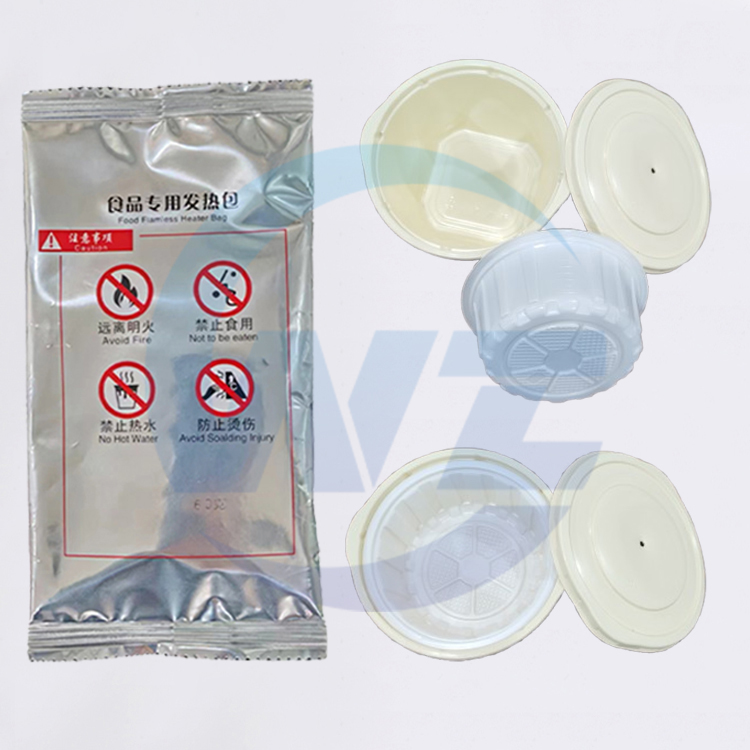
But a massive shift is occurring across the global outdoor retail landscape. Hardcore backpackers, family campers, and van-lifers are leaving their bulky stoves at home. Instead, they are turning to self-heating food bags to enjoy hot, fresh meals on demand with zero fuss.
Here is an analysis of how this water-activated, flameless technology is fundamentally changing the game for outdoor enthusiasts and the commercial brands that supply them.
Redefining Camp Kitchen Logistics
For decades, the weight and geometry of cooking gear dictated how far a camper could travel. Standard cooksets require multiple points of failure: a burner, a fuel source, a lighter, and a rigid metal pot.
Self-heating food bags compress that entire infrastructure into a single, feather-light pouch.
[Traditional Setup: Stove + Gas Fuel + Matches + Metal Pot]
vs.
[Modern Setup: Self-Heating Pouch + Ambient Water]
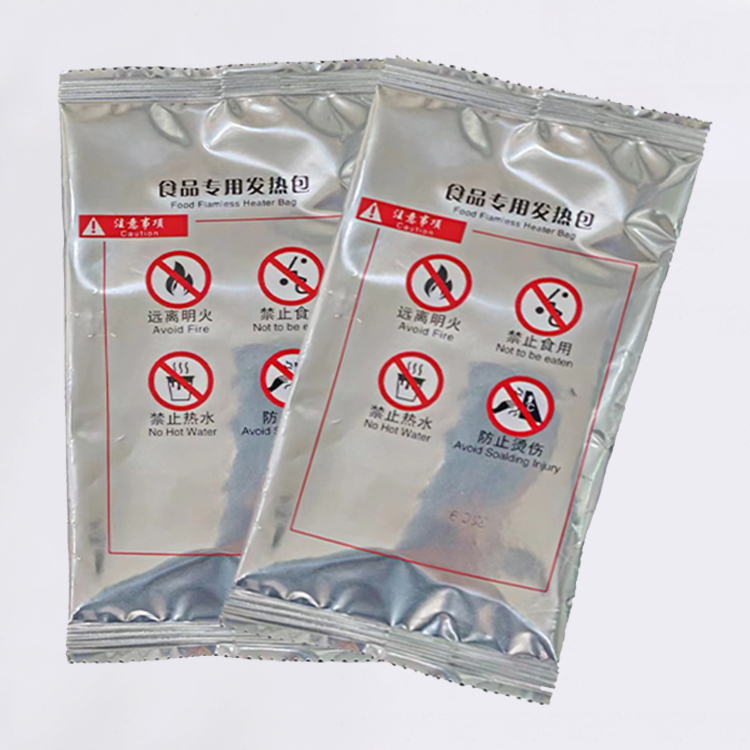
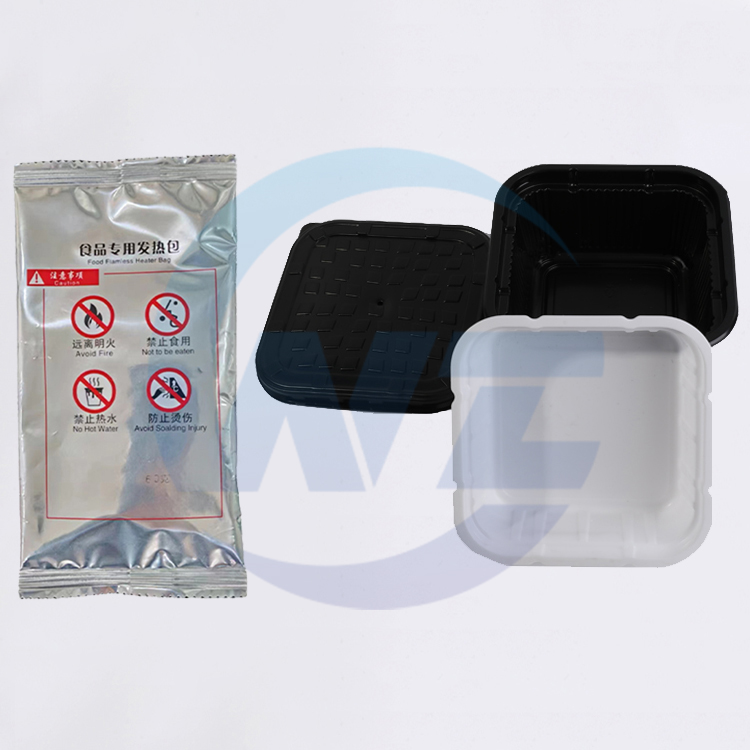
By utilizing a small, internal pouch filled with food-grade metallic alloys (such as high-purity magnesium or aluminum-iron matrices), the bag creates an instant exothermic reaction when it comes into contact with a small splash of water. It bypasses the need for open flames entirely, generating pure thermal steam that heats meals thoroughly within minutes.
Why Self-Heating Bags are Dominating the Trail
For B2B distributors and outdoor brand product managers, understanding why retail consumers are migrating to this format is essential for positioning your inventory:
1. Compliance with Strict Fire Bans
Due to shifting global climate patterns, forestry departments worldwide are implementing zero-tolerance fire bans during peak summer months. These bans often prohibit not just campfires, but even traditional liquid-fuel backpacking stoves. Because self-heating bags produce no sparks, no flames, and no ambient smoke, they are 100% legal to use in restricted wilderness areas.
2. Impervious to Alpine Weather
High wind, pouring rain, and sub-zero temperatures are the natural enemies of a gas burner. Trying to maintain a steady cooking flame at high altitudes can quadruple your boiling times and waste valuable fuel. Flameless chemical heating takes place inside a sealed, insulated high-barrier vacuum sleeve. The weather outside has virtually zero impact on the internal cooking curve.
3. Maximum Spatial Efficiency
Rigid metal pots and cylindrical gas canisters create “dead air space” inside a backpack, making packing a geometric headache. Self-heating food pouches pack completely flat. They can be stuffed into the narrowest side pockets or compressed tightly into dry bags, maximizing your pack’s volumetric capacity.
The Factory Standard: Engineering the Perfect Outdoor Pouch
As an integrated manufacturing and export enterprise, our automated facility approaches self-heating technology with mathematical precision. For a commercial camping food brand to succeed, the heater must balance safety with raw thermal performance.
Our production lines operate under strict humidity-controlled environments (<30% RH) to guarantee that every chemical pad retains an ironclad 3-to-5-year shelf life.
Furthermore, our premium formulas are engineered to deliver a flat, sustained thermal curve rather than a dangerous, volatile spike. The bag reaches 85°C–95°C (185°F–203°F) within 3 minutes and holds that intense warming zone for over 12 minutes, ensuring that even thick, dense stews or rice dishes are perfectly hot right to their center.
Conclusion: Capitalize on the Minimalist Camping Movement
The modern outdoor consumer values two metrics above all else: weight reduction and frictionless convenience. By integrating certified, factory-direct self-heating food bags into your retail product lines or food distribution networks, your brand delivers an unmatched, luxury trail-side dining experience that traditional camp kitchens simply cannot compete with.
👉 [Contact Our Outdoor Product Sourcing Team] today to request a comprehensive compliance package, CAD design mockups, and private-label prototype samples for your upcoming seasonal launch!
FAQ: Sourcing & Field Performance Questions
Q: Does the chemical steam from self-heating food bags leave any toxic residue on the food?
A: Absolutely not. The water-activated exothermic reaction takes place entirely inside the outer heating sleeve, completely separated from your meal. The food itself is safely contained within a hermetically sealed, multi-layer retort pouch. There is zero contact between the chemical formulation and the food, ensuring that the aroma, taste, and food safety compliance remain 100% intact.
Q: What is the Minimum Order Quantity (MOQ) for custom-branded outdoor heating bags?
A: For standard, unprinted or stock packaging layouts, our factory supports entry-level validation runs starting at 10,000 units. For fully customized OEM projects—including custom bag dimensions, integrated water-measurement windows, and high-definition 8-color gravure printing directly onto the outer sleeve—the standard MOQ is 50,000 units, backed by a 25-to-30-day mass production timeline.
Q: Can backpackers use cold stream water to trigger the self-heating reaction?
A: Yes. Our factory’s proprietary chemical alloy incorporates specialized thermal accelerators. While freezing or glacial water might introduce a brief 30-to-60-second delay in the initial activation curve, the formula possesses more than enough energetic density to overcome cold starts and rapidly reach standard cooking temperatures.
Q: Are these self-heating pouches safe to pack in commercial airline luggage for destination camping trips?
A: Yes, when properly documented. Our factory-produced heaters are vacuum-sealed in ultra-thick protective composite films to prevent accidental activation. Every bulk shipment leaves our facility with updated MSDS sheets and current UN3363 Transport Certifications, proving they are legally cleared for international logistics networks and ecommerce distribution. Consumers should check individual airline regulations regarding carrying sealed chemical warmers in checked baggage.
STAY IN THE LOOP